The Dr. Guy Shkolnik Music Theory Course
If you’re a self-taught, or a semi-self-taught musician who’s learned from various sources, but still struggle to see how the elements work together - this course is for you.
"Unlike any other online course I've ever seen"
—Soubir Moitra, songwriter/producer
If you've tried learning harmony on your own from books or even in lessons you took in the past, you know the problem.
There are great books out there, but you have to be able to read music and play the examples, and if it's a classical harmony book - you'll need to translate everything into modern harmony, which is not easy to do on your own.
There are also the YouTube tutorials, but the problem is - they are too scattered. Different teachers and methods - yes, it's free but trying to make sense of it all can cost you precious time you could spend actually playing and creating.
As a PhD in music theory, I've taught hundreds of college harmony students, so I know exactly where people get stuck: usually not with one specific topic but with the connection between the topics. A lot of people may know scales, chords, modes, and extensions, but still feel unsure how they connect in real music. When exactly to use the 13 chord or how to actually use modal mixture in a song?
In this course it all begins with the basics not treated as beginner material. because they are not.
They are taught in a way that leads directly to the more advanced sounds.
This will help you understand things like how to actually voice a G13 chord, and why does it resolve so naturally to C6/9? Why are chords like Em7 and C9 often played without the 5th?
How to use inversions and why does Dorian mix so naturally with minor?
Everything in this course is taught in the same clear, musical way you may already know from my YouTube and Instagram videos. I play everything at the piano, so you can hear the sound together with the explanation.
Here how it works:
1. Clear step-by-step video lessons where you hear and see exactly what I'm playing.
2. Examples from well-known songs and pieces so you recognize how things work in the context of real music.
3. Written explanations for every lesson, so you can review key ideas.
4. Dozens of quizzes to practice and test yourself.
5. An 8-page PDF with all the progressions from the course.

“Dr. Guy has a very precise, application-based approach that feels natural, which is why I started following him on Instagram, a goldmine of information in itself. This course gives concise access to the tools and concepts you need for a strong musical foundation. Unlike any other online course I’ve seen, it keeps developing with you.”
Soubir Moirta, Songwriter/Producer

Jim Spadoni
"Being self-taught on piano, Dr. Shkolnik’s Music Theory course was the perfect introduction to ‘real’ music theory I’d been looking for. The video lessons alone are worth the price, and I especially appreciate his use of popular music examples to show what’s happening harmonically. The PDF printouts live in my notebook, I still use them in my practice and when I need a refresher on modes or chord extensions. A great investment of time and money - highly recommended.”
Welcome!
How this course works
1. Semitones
2. Whole Tones
Quizzes: Semitones and Whole Tones
3. The Major Scale
Quizzes: Major Scale
4. Sharps and Flats
Quizzes: Sharp and Flats
5. Tonic, Dominant, Subdominant and the Leading Tone
Quizzes: Tonic, Dominant, Subdominant and leading tone
6. Stable Notes and Active Notes
Quizzes: Stable Notes and Active Notes
7. Major and Minor Thirds
Quizzes: Major and Minor Thirds
8. Triads
Quizzes: Triads
9. Triads of the Major scale
Quizzes: Scale Degrees Triads
Section 1: What you should practice
Assignment: Learning the Major scales
Playing Triads on the Piano
10. Chord Progressions: I - IV - V - I
11. The G7 Chord - V7
Quizzes: The G7 chord - V7
12-13: Two Voice-Leading rules for Triads
Quiz: Common Tones
Quiz: Voice Leading Rules
👉 Practice progression
Keyboard Progressions PDF
15. The Minor Scale: Relative and Parallel
Quizzes: Parallel and Relative Minor Scales
👉 16. Natural Minor: Practice Progression
17. The Harmonic Minor
18. The Melodic Minor
Quizzes: Melodic Minor Scale
19. How minor is used in real music
Minor scale quizzes
Keyboard Progressions PDF
20. First Inversion Chords
Quizzes: 1st Inversion Chords
21. Second Inversion Chords
Quizzes: 1st and 2nd Inversion Chords
Keyboard Progressions PDF
👉 Practice progression: Chord inversions.
Passing chords
👉 Practice Progression: Passing Chords
Passing chords Quiz

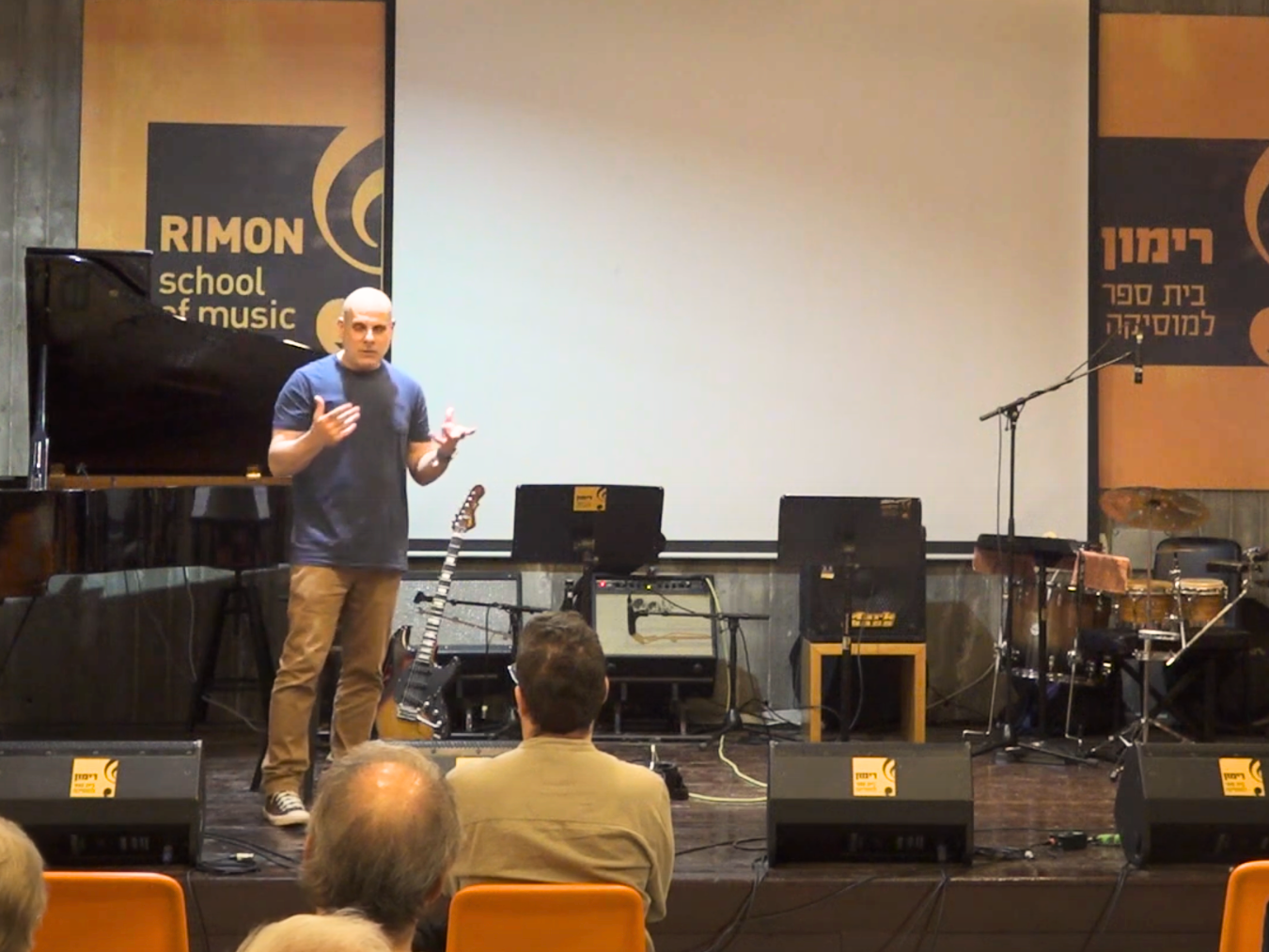
I’m Dr. Guy Shkolnik, a composer, pianist, and PhD in music theory. I’ve taught hundreds of musicians and shared this work with more than 350,000 people online. I’ve taught at Rimon School of Music (Berklee-affiliated) and Haifa University.
This course distills what actually helps: clear demonstrations at the keyboard, real-song examples, and a path you can follow at your own pace.


Absolutely.
Yes, it is. I explain everything at the keyboard because harmony is easiest to see and understand there. But don’t worry, what I play is not technical, and you won’t have any problem following along. If anything, this course will teach you that clear, minimalist, professional-sounding keyboard approach that can elevate your productions and arrangements.
No, you don’t. I explain everything at the keyboard. That said, I’ve also included a PDF with all the main progressions from the course. So if you do read music or even just a little and want to improve, the PDF will definitely help.
Yes, you'll need a keyboard of at least four octaves (49 keys) to practice the progressions and the tutorials of this course.